Local supergroup Australian Rock Collective (ARC) is undoubtedly Australia’s most celebrated all-star ensemble with a combined 33 ARIA Awards and 16 Top Ten ARIA Albums. Made up of four Australian rock icons — Kram (Spiderbait), Darren Middleton (Powderfinger), Mark Wilson (Jet) and Davey Lane (You Am I) — ARC brings the energy of lifelong music fans to the stage, backed by the legacy, skill and experience of artists who helped shape the scene.
Known for performing iconic full albums live, ARC has previously toured Pink Floyd’s Wish You Were Here and Dark Side of the Moon, as well as Led Zeppelin’s Led Zeppelin IV. This year, they played the Eagles’ legendary Hotel California in major performing arts centres and theatres across the country.
Over the years, ARC shows have become known for high production values that set them apart and create a memorable audience experience.
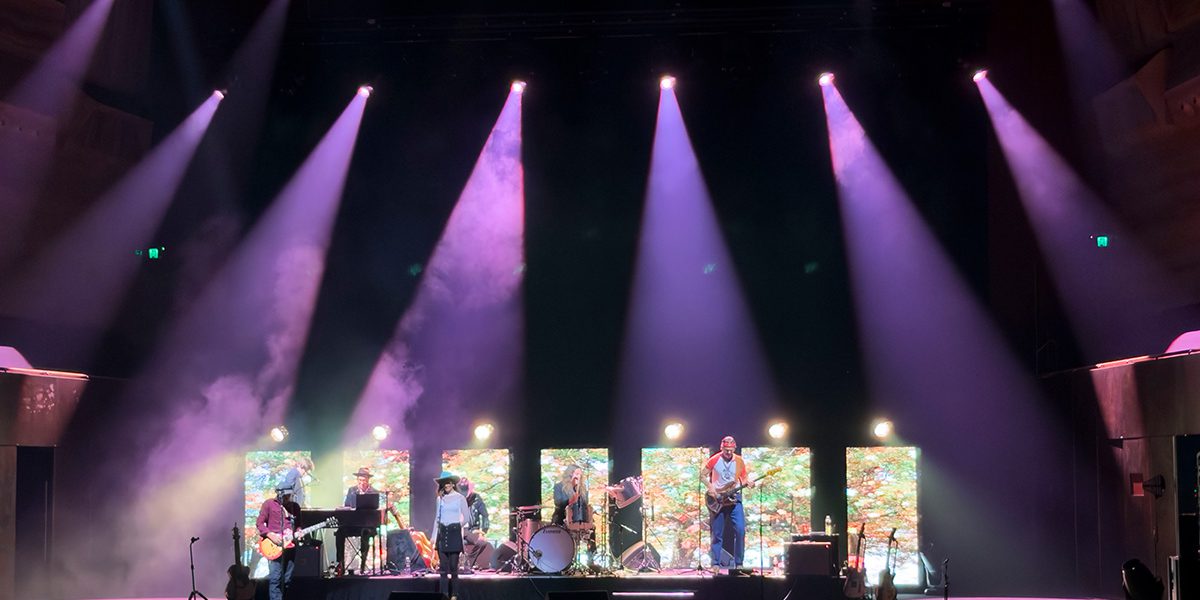
Lighting designer and Phaseshift Production’s Production Manager, Craig Boyes, has lit the past three years of ARC shows, but this year’s show required a different approach. The music lent itself to the strong visuals rather than more traditional flashing rock lights. Consequently, Craig decided that LED panels were the solution, choosing seven, each two metres high and a metre wide.
“This meant we could travel them on dollies, avoiding building a screen at every gig,” said Craig. “I did this with the Sydney Opera House time constraints in mind, so I could wheel them into the lifts and back out again.”
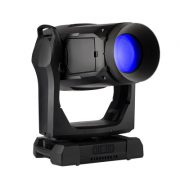
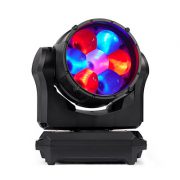
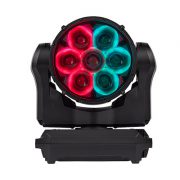
Craig toured a floor LX package including Martin MAC Aura XIPs, one on top of each screen, two MAC Viper XIP downstage and four upstage for gobos and big looks. The brightness of both MAC fixtures easily cut through the screens’ intensity.
“Even with gobos in them, the MAC Viper XIP punch through the screen content,” commented Craig. “They’re my favourite profile at the moment just because they’ve got a great gobo selection as well. There are other punchy lights out there, but then you go into their gobo and ask yourself, do I really want to see that against the wall? They are fine in the air, but when they unfortunately land somewhere, you have to wonder! As I said, you can use the gobo and colour without losing the light, which really creates a beautiful, deep effect.”
Craig especially values how the MAC Viper XIPs and MAC Aura XIPs deliver a consistent colour palette across the rig, creating a dynamic overall look.
A few months ago, Phaseshift added 16 more MAC Aura XIP fixtures to its inventory, with Craig noting their standout brightness and versatility.
“The original MAC Aura became an industry standard, and the XIP is a natural evolution,” he said. “It now lets you pixel-map the fixture, so you can animate the wash light. It’s slightly larger, with added features and filaments that produce a brighter aura backlight effect. For its size, it’s extremely versatile, lightweight and easy for one person to handle.”
For the ARC show, Craig used the MAC Aura XIP’s rich colour palette as backlight behind the screens, blending colours that extended above them.
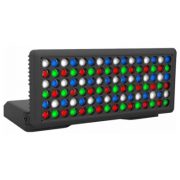
The rig also included eight ShowPRO Smart Books: wireless, battery-powered wash lights supplied in packs of four with a charging case. With their high output and slim, foldable design, Craig used them as uplights for the band, placing two in front of each member.
“They’re a great little fixture you can place almost anywhere,” Craig said. “They’re RGBW, so you get a clean white rather than that pearly colour, and they work straight out of the box thanks to the built-in wireless DMX receiver.
“As portable, battery-powered LED lights, they’re more powerful than anything else I’ve used. They’re a little larger, about the size of an A4 book, and don’t even look like lights until they’re switched on. You can also angle them however you need.”
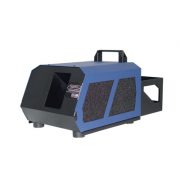
In Craig’s touring rig were two Look Solutions Unique 2.1 Hazers with extra atmosphere added for the larger gigs, such as the Sydney Opera House.
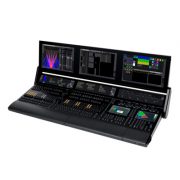
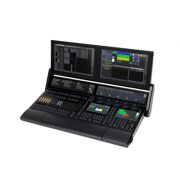
Control was handled on an MA Lighting grandMA3 full-size, though an MA3 light would have been sufficient. Phaseshift did not have one available at the time because of their popularity; however, they have since taken delivery of a new MA3 light.
“It was great having a full-size MA3; just having the faders and being able to have a fader for each person in the band, put to a separate master, was great,” said Craig. “You could set the levels on the band, with one fader assigned as playback master to run them up and down and the levels are alright ,and to highlight someone, I just pull up their individual fader. The luxury of having faders is always great for an operator.”
Alongside the MA3 light, Phaseshift added an NPU to expand capacity for larger shows and avoid running out of parameters with today’s increasingly complex fixtures.